Tinsel


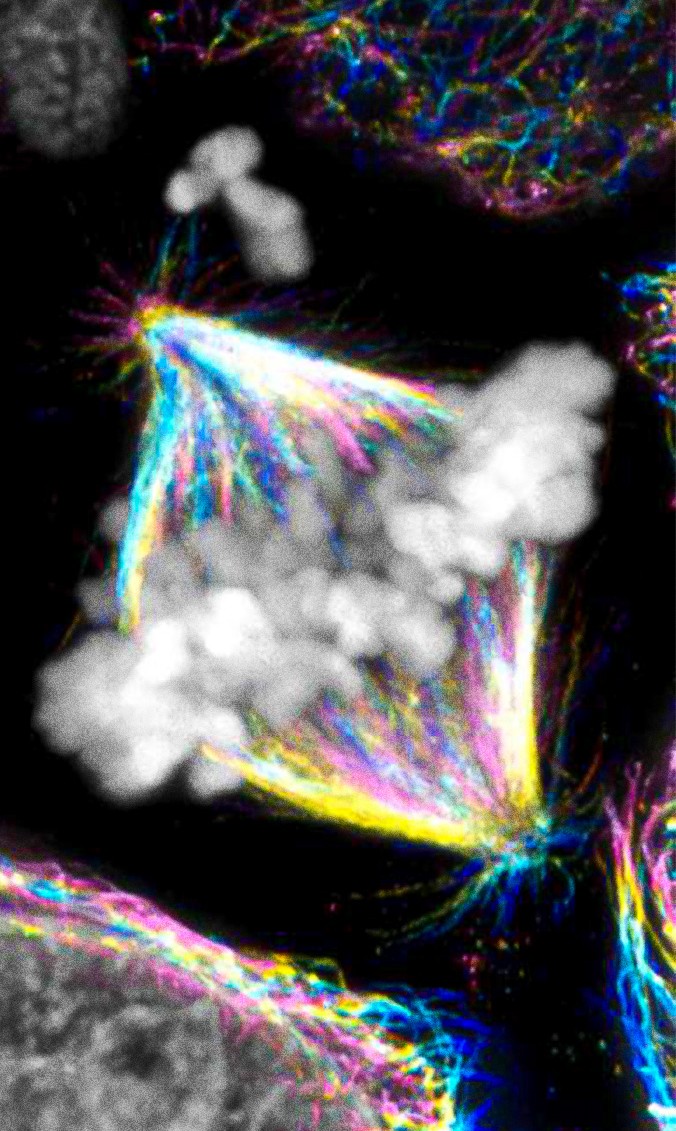
Bacteria have immune systems to defend against their viruses.
— Marc Erhardt (@Salmo_Lab) October 12, 2026
another quick reminder that survival drives and multicellularity is emerging from pure natural selection of randomly mutated untrained neural network particles in a heat🛀
— Fraser Price (@fraserpricee) October 27, 2026
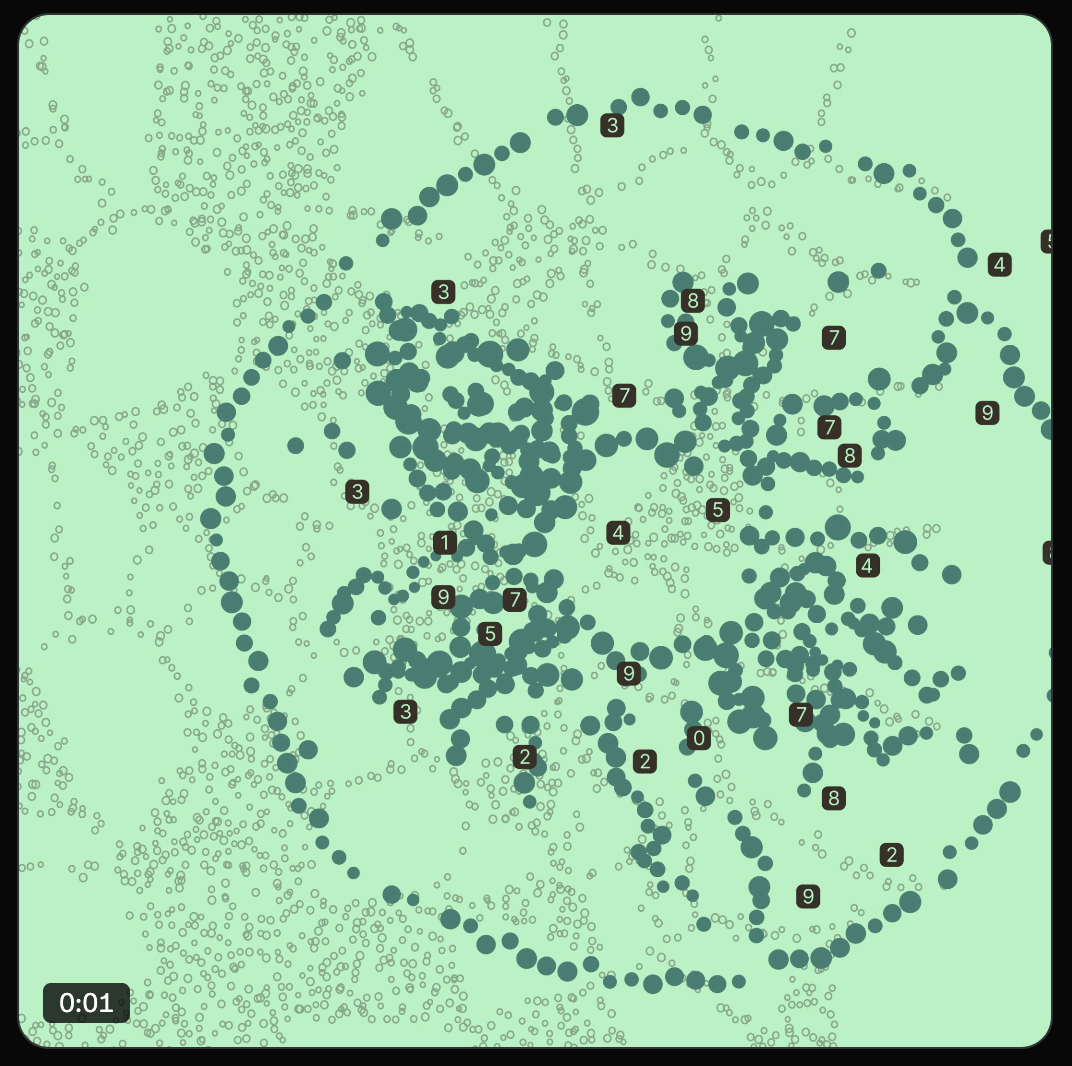
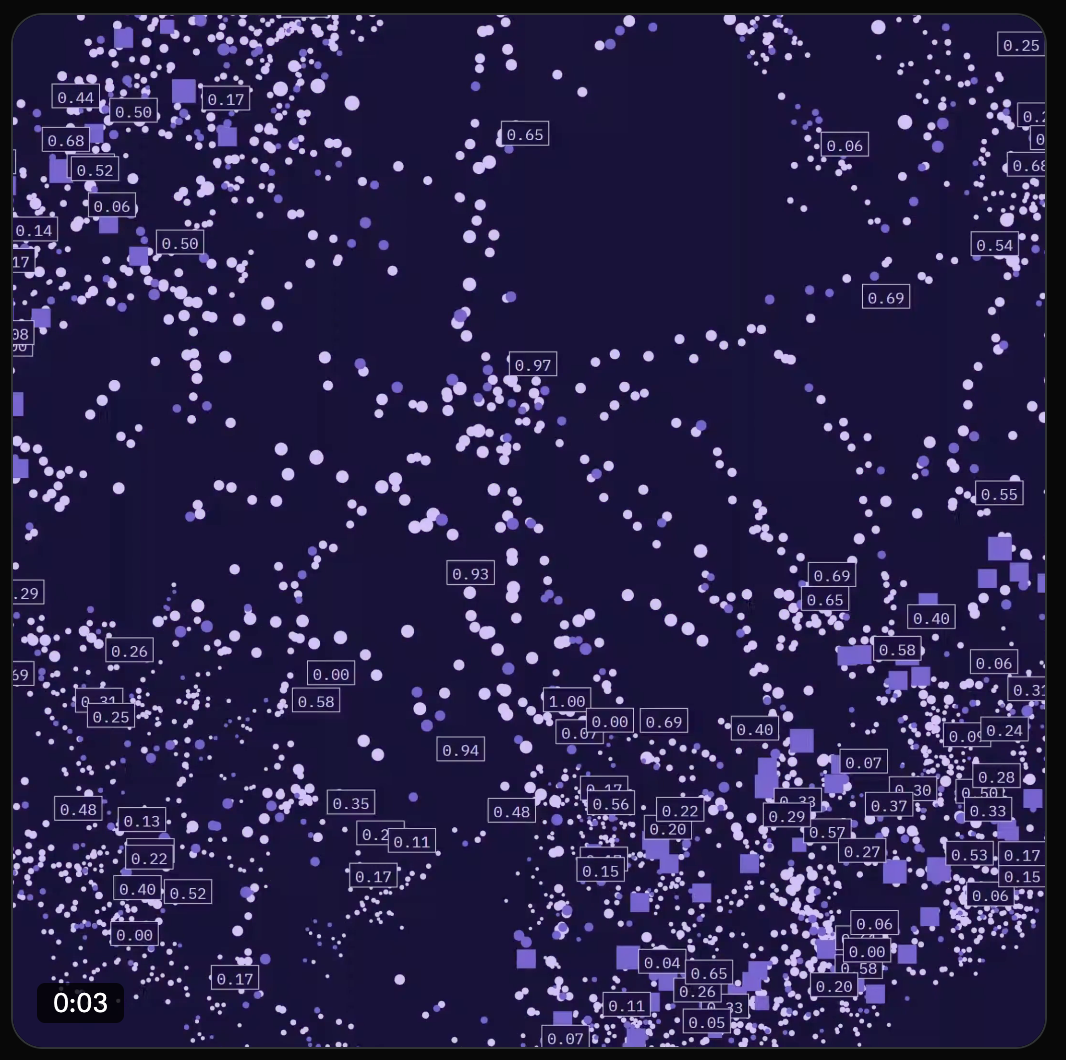
Mark Tensen, Ciaran Regan, Bert Wang-Chak Chan, Mizuki Oka, Kenneth O. Stanley and Grisha Szep. Microcosmos: Reimagining Artificial Life for the GPU Era (arXiv:2607.02954v1, 2026).
Linear scaling with particle count confirms the engine supports large-scale simulation.
A model shows how complex brain-like dynamics can emerge from simple interactions between adaptation and network structure, even when individual neurons behave irregularly.
— Earl K. Miller (@MillerLabMIT) July 1, 2026
Automating the Search for Artificial Life with Foundation Models (2024).
ASAL is agnostic to both the specific FM and the simulation substrate
Giuseppe Longo and Maël Montévil. Perspectives on Organisms: Biological Time, Symmetries and Singularities. Springer, 2014.
The Physics of Causation - Cronin
Leroy Cronin and Sara I. Walker. The Physics of Causation (arXiv:2601.00515v3, 2026).
Assembly theory (AT) introduces causation as a material property and establishes a metrology for objects produced by evolution and selection.
“Strictly speaking, an anticipatory system is one in which present change of state depends upon future circumstances, rather than merely on the present or past. “
Robert Rosen. Anticipatory Systems: Philosophical, Mathematical, and Methodological Foundations. 2nd ed., Springer, 2012.
building a force-based alife sim with fable 5.2, including hunting, avoidance, and blended gene inheritance.
🎶 μ-ziq & mrs jynx — secret garden
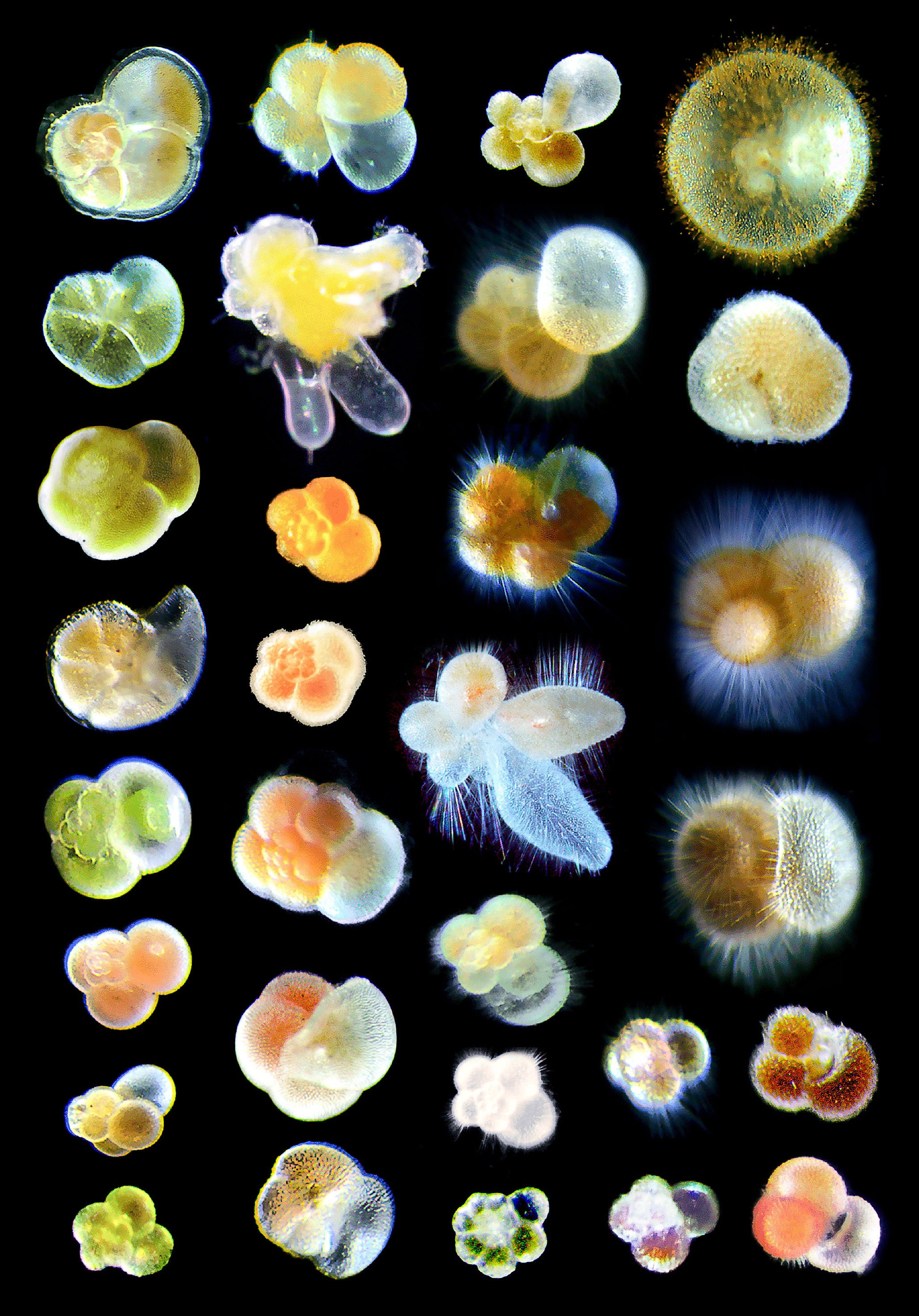
Each marine plankton seen here is smaller than 1 millimeter.
— Quanta Magazine (@QuantaMagazine) September 12, 2026
Why Do These Fossil Shells Flip Their Spirals Every Few Millennia? · Fanni Daniella Szakál, Quanta Magazine, September 11, 2026.
Image via Quanta Magazine, adapted from Haruka Takagi et al., Characterizing photosymbiosis in modern planktonic foraminifera (2019), fig. 2. CC BY 4.0.